Track every inflow and outflowUnderstand every profit figure
Track receivables, payables, and cash movements, and understand profit or loss across orders and products. From daily finances to the full picture of your business, follow up systematically and make decisions with evidence.

As your business grows, know where the money comes from and where it goes
Beyond sales, receivables, payables, costs, and expenses all affect the final business result.
Too many accounts to follow up
When records are scattered, it is easy to miss customer receivables and supplier payments that need attention.
More sales do not always mean more profit
With platform fees, refunds, and product costs, sales alone cannot show which orders are profitable or which products deserve more investment.
Store expenses are easy to overlook
Operating expenses such as rent and labor are scattered across different records, making the reported profit look healthy while the actual business performance remains unclear.
Repeated work to reconcile invoices
Issued, returned, and canceled invoices are scattered across companies and stores, making data collection repetitive and time consuming.
Trace receivables, payables, and cash movements
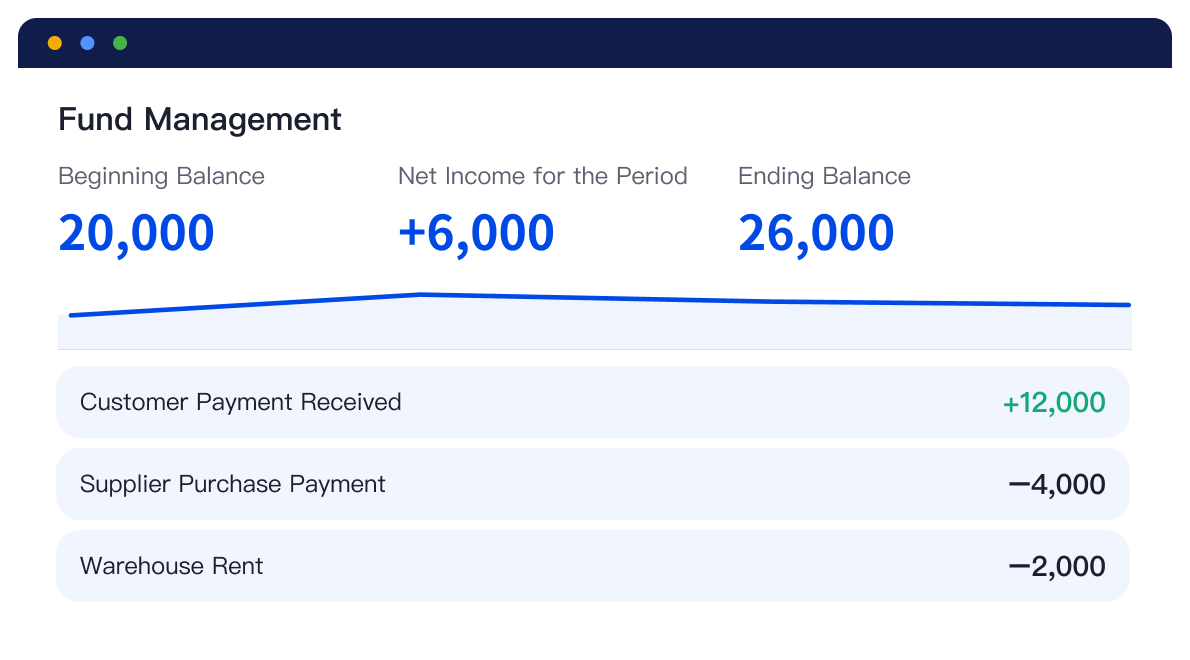
Know what is due to be received or paid and trace what has already been settled. Link accounts with cash movements to reduce omissions and stay in control.
Examine orders in detail and products across platforms
Calculate profit for each order on a single platform and allocate it to products across platforms. Get detailed order accounting and a broader product comparison together.
Include operating expenses
Include rent, labor, and other operating expenses in profit calculations. Counting everyday income and spending gives you a clearer view of overall store performance.
Invoice Summary for Clear Reconciliation
Summarize issued, returned, and canceled invoices by company, store, and month, reducing repeated work and providing a basis for reconciliation.

From every account to the full business result
Keep daily finances organized, analyze profit at several levels, and make business decisions with confidence.
Keep receivables and payables in view Know where your funds go
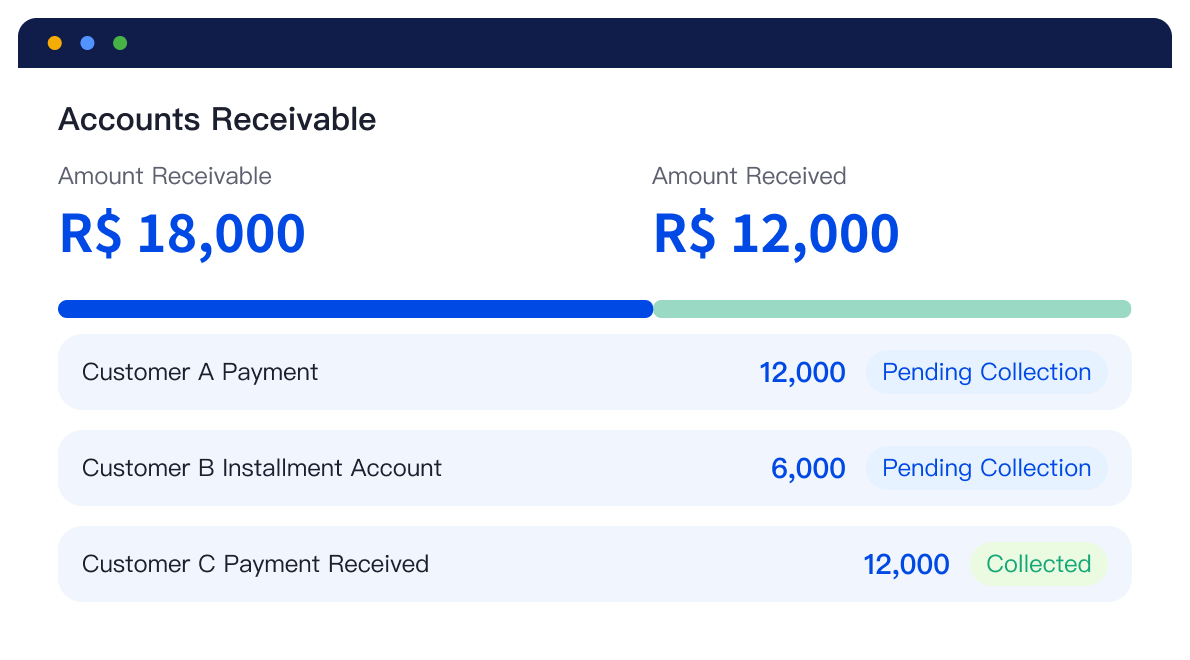
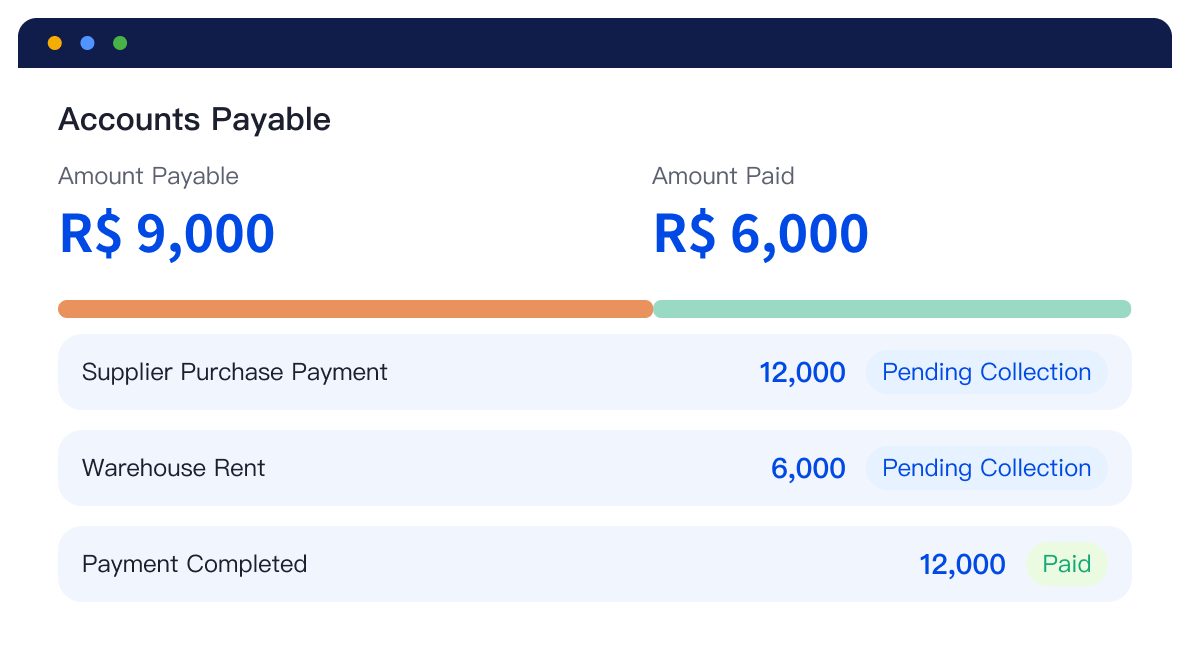
See how much is due and when payment is expected at a glance.
See pending and received payments and due dates clearly. Plan installment receivables and follow up with customers in an organized way.
Order profit by platformCalculate profit and loss order by order
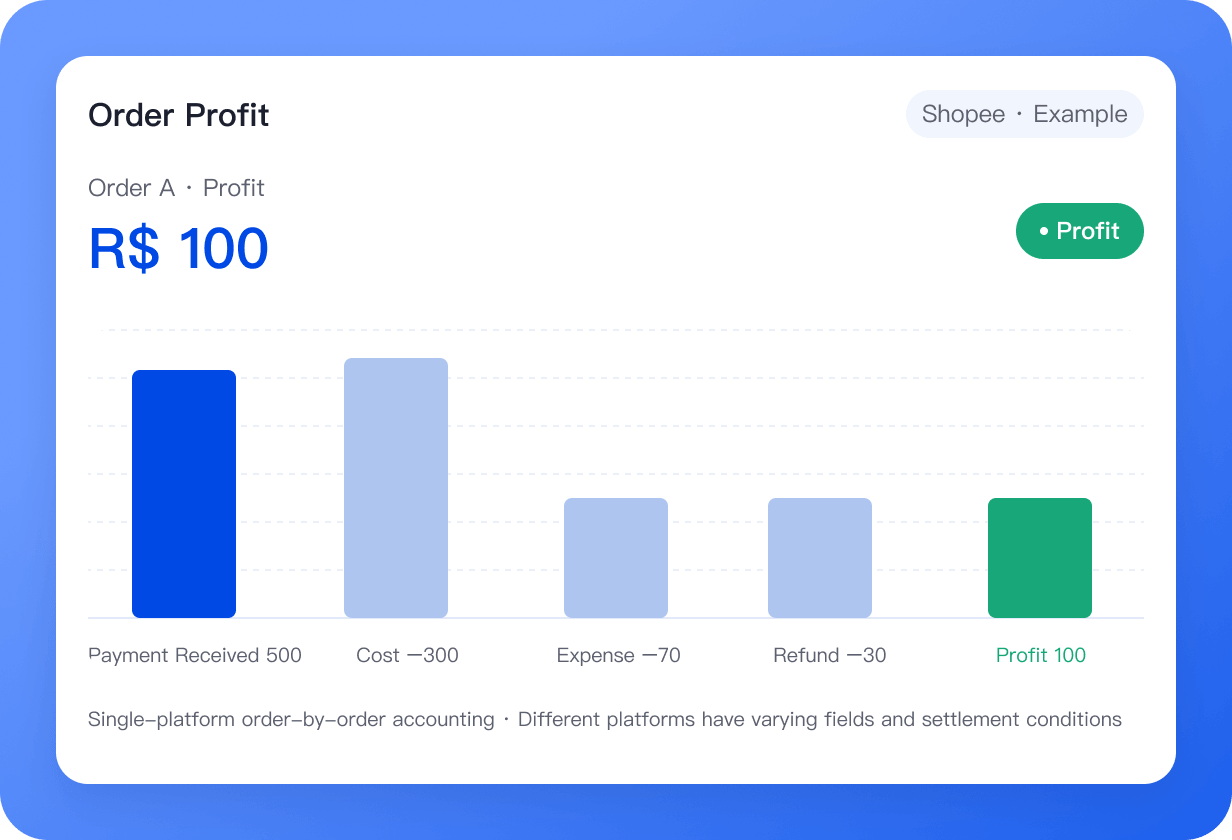
View order payments, product costs, platform fees, and refunds together to see how much you earned, where profit came from, and what affected it.
 Review results order by order: identify profitable and loss making orders more easily.
- See the components: use income, costs, and fees as clear reference points.
- Explain the differences: find orders and fee changes that need attention.
Understand each order first, then understand its profit.
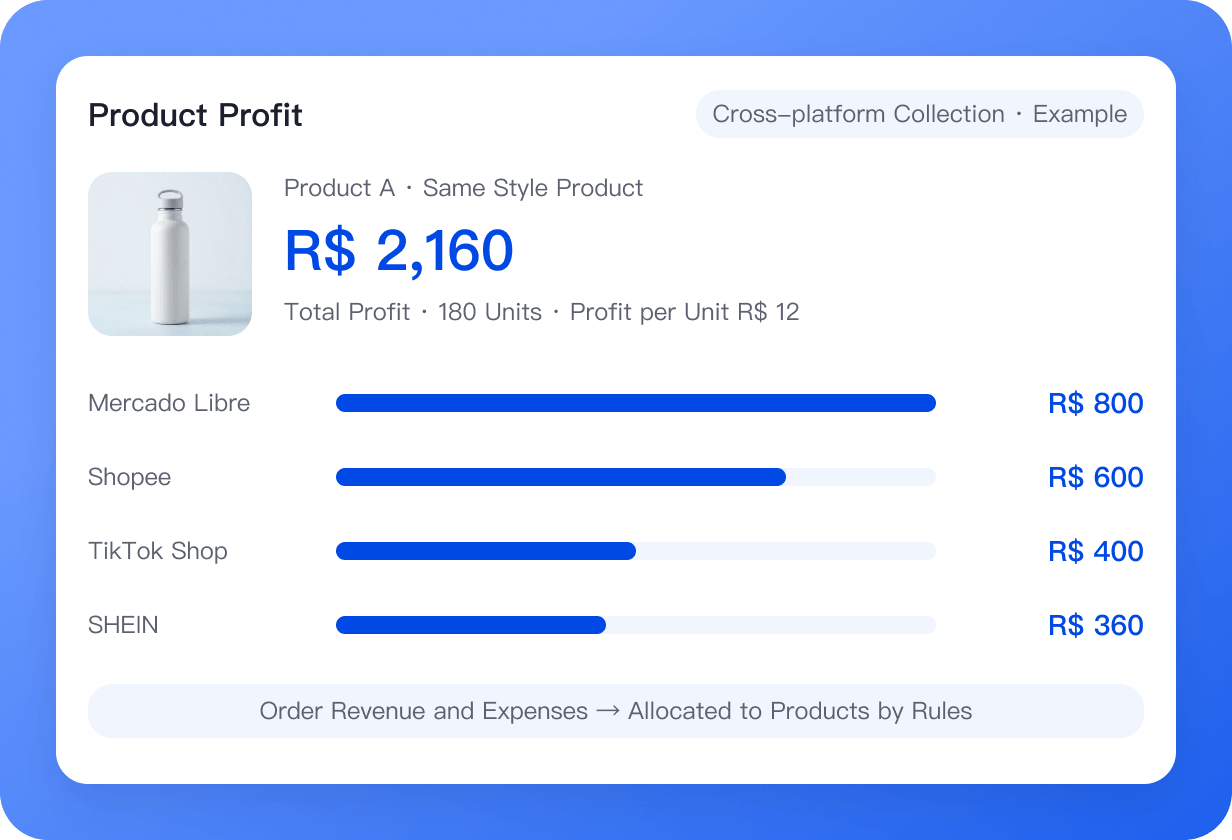
Product profit across platformsFrom order details to the full product picture
Product profit comes from order profit. Allocate order income, fees, and costs to products according to the rules, then compare the same product across platforms and stores.
- See product profit in more detail: compare total and per item profit to identify products worth investing in.
- Compare platforms more clearly: view the same product together to make better informed decisions.
- Focus improvements: use data to inform product selection, pricing, and promotion.
Product profit currently covers Mercado Libre, Shopee, TikTok Shop, and SHEIN
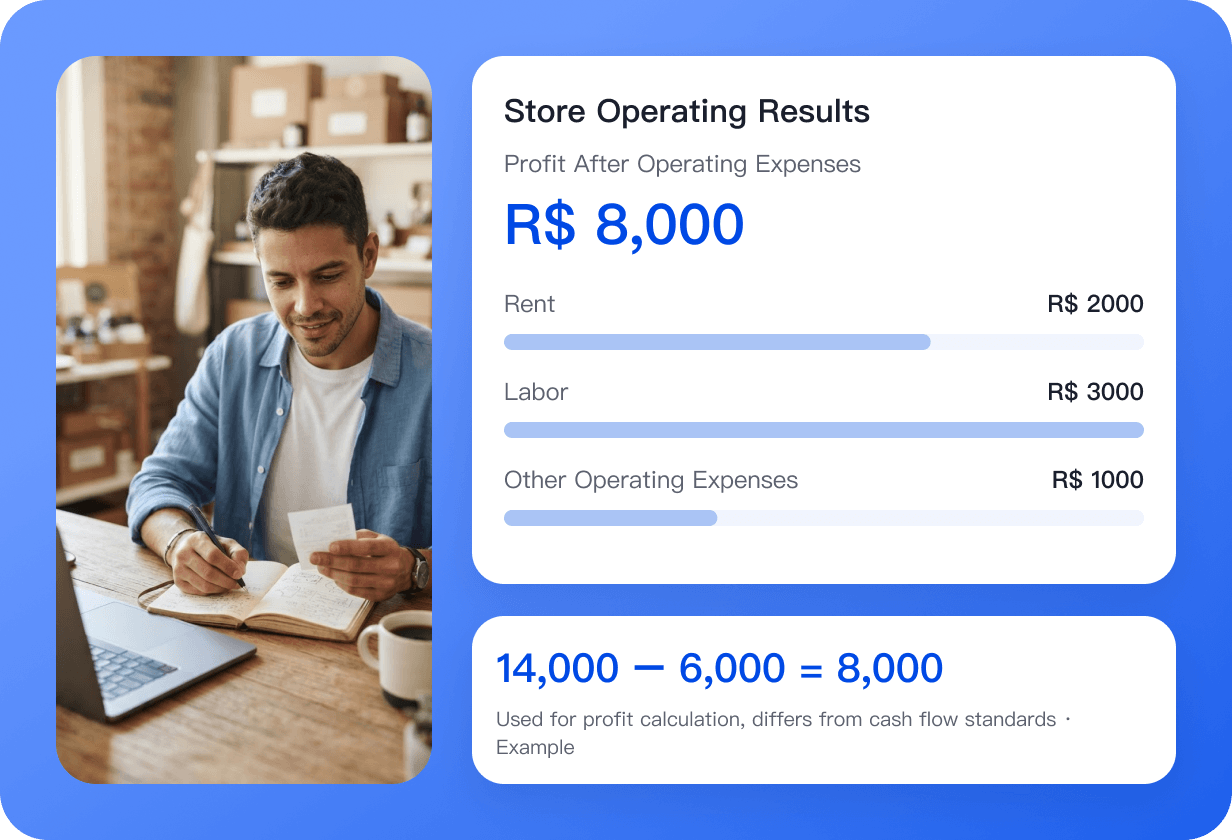
Include daily operating expensesSee overall store performance
Beyond platform profit, operating expenses such as rent and labor affect the final result. Include this income and spending to see a more complete picture of store performance.
- Account for expenses: assign operating costs beyond platform fees.
- See store performance more completely: assess results using profit, costs, refunds, and expenses.
- Compare operations with more evidence: understand profit differences and expense burdens across stores.
Store expenses are used in profit calculations and follow a different basis from funds management transactions
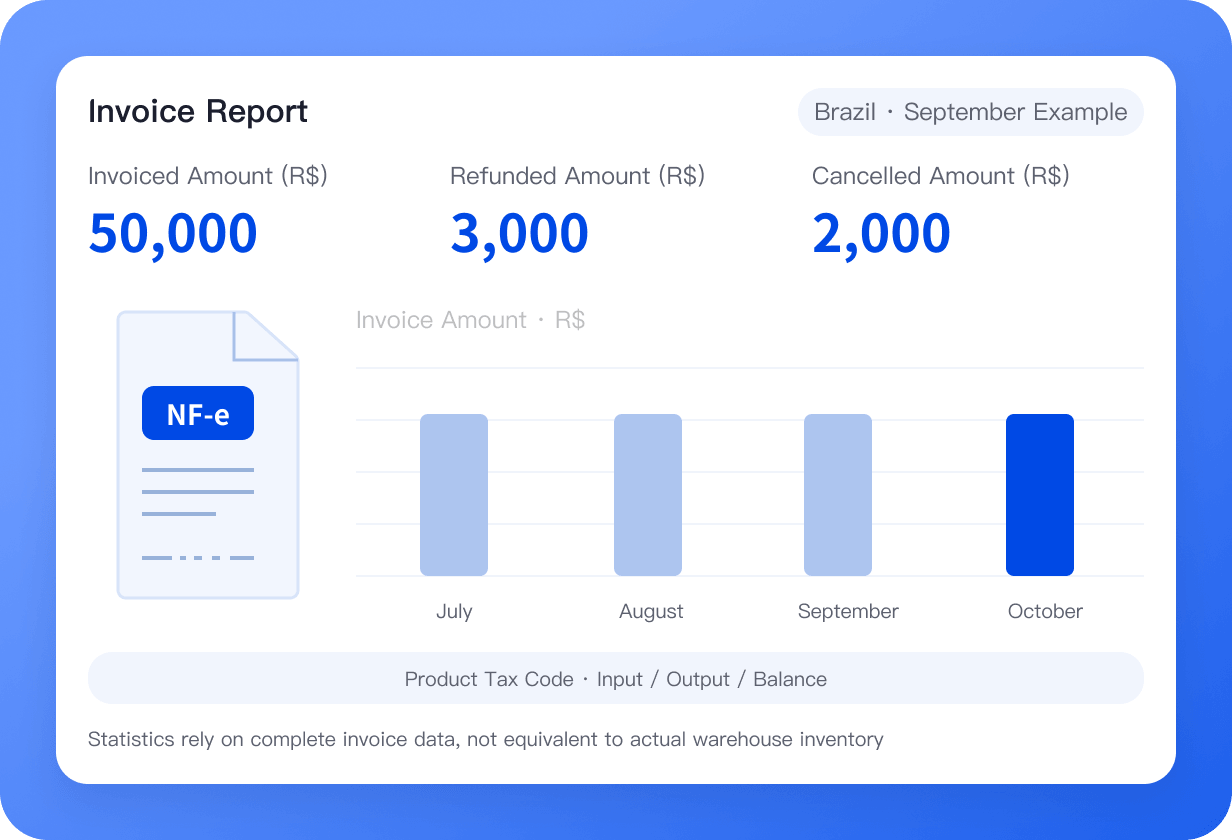
Bring invoice data together clearlyReduce repetitive financial reconciliation
View invoicing by company, store, and month alongside purchase and sales statistics by product tax code, turning scattered invoice data into useful reconciliation evidence.
- See invoicing clearly: issued, returned, and canceled amounts are shown separately.
- Consolidate purchases and sales: see quantities and amounts by product tax code.
- Keep complete records: use reports and details for later financial reconciliation.
Applies to relevant Brazilian invoice reports; statistics depend on complete invoice data
Organized finances support better business decisions
Turn the details of daily finances into a basis for business decisions.

Accounts needing follow up no longer get buried in records
See customer receivables, supplier payables, and due dates clearly. Know what needs attention and whom to follow up with next.

See orders in detail and the full product picture
From order profit on one platform to product comparisons across platforms, explain each profit or loss and understand overall product performance.

Include expenses for a more complete business picture
Consider rent, labor, and other costs alongside store performance to reduce omissions and assess business results more completely.

Find the data you need and reconcile with confidence
Use income and expense records and report details as clear references, reducing repeated searches and supporting financial discussions and reconciliation.
Frequently Asked Questions (FAQ)
Understand data sources to make financial analysis more reliable.
Order profit is first calculated per order within a single platform. Product profit is derived from it by allocating income, fees, and costs to products according to the rules. Order profit explains individual order results, while product profit supports comparisons across platforms and stores.



 Mercado Libre
 Shopee
 Amazon
 SHEIN
 TikTok Shop
 TEMU
 Falabella
 AliExpress
 Magalu
 Kwai
 Americanas
 Walmart
 Shopify
 Nuvemshop
 WooCommerce